
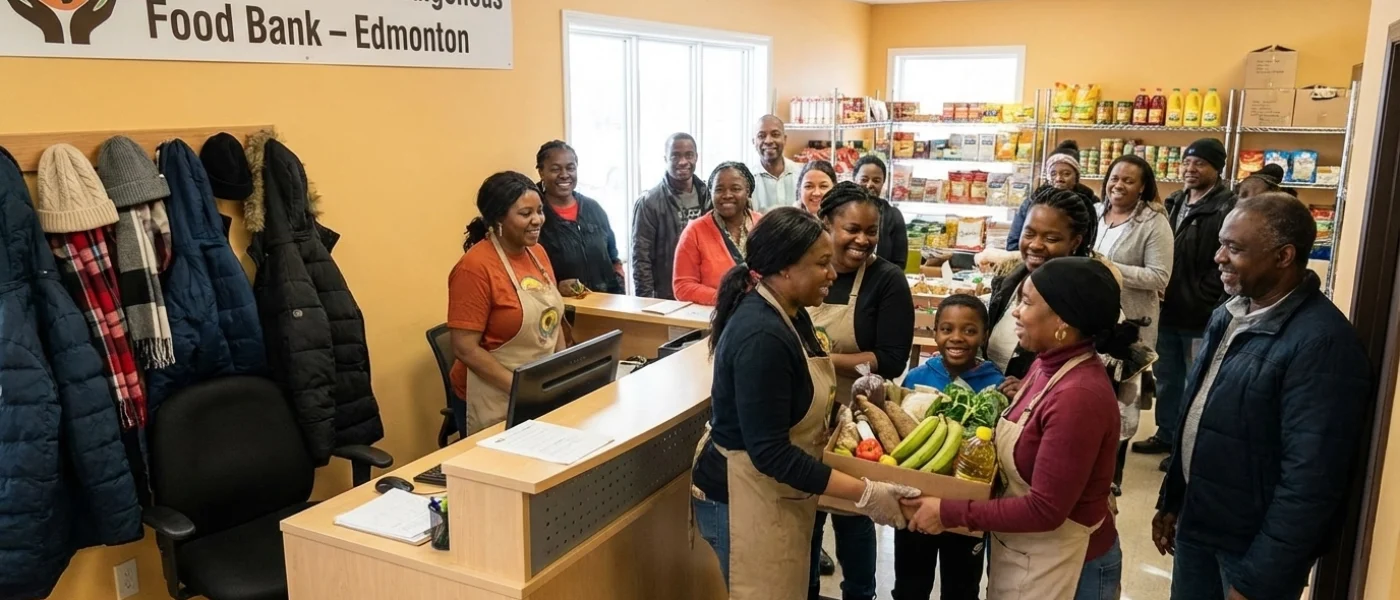
Picture this: You work 40 hours a week, maybe even juggle two jobs, yet you're standing in line at a food bank. You're not unemployed. You're not lazy. You're one of thousands of Edmonton families discovering that having a job doesn't guarantee food security.
This isn't a story about the unemployed: it's about working families who've been pushed into impossible choices between rent and groceries, between keeping the lights on and putting culturally familiar foods on the table.
The Reality Behind the Paycheque
Working Canadians make up 51.9% of all food-insecure households, even though only 13.7% of employed people experience food insecurity. These numbers tell a powerful story: employment alone isn't protecting Edmonton families from hunger.
You might wonder how this happens. The math is stark and unforgiving.
Take a family earning minimum wage in Alberta: roughly $23,000 annually after taxes. Now consider that the average two-bedroom apartment in Edmonton costs $1,304 per month. That's 54.1% of their entire budget gone to housing alone. Add utilities, transportation to get to work, and suddenly there's only 5.2% left for everything else: including food.

But here's where it gets particularly challenging for the communities we serve at ACFB. A healthy, culturally appropriate diet for a family of four consumes 40.7% of a low-income family's monthly budget. When you're already stretched thin, those specialty ingredients that make meals feel like home: the scotch bonnet peppers, plantains, or specific cuts of meat for traditional stews: become luxuries you can't afford.
When Middle-Class Meets Food Insecurity
You might assume food insecurity only affects minimum-wage workers. You'd be wrong.
Middle-income households are increasingly seeking food bank support for the first time in their lives. These are families with steady employment, perhaps even dual incomes, who never imagined they'd need help feeding their children.
The reasons are layered and complex:
Inflation hit food costs hard in 2022, with prices rising over 10%. Your grocery budget that worked fine in 2021 suddenly falls short. Those familiar ingredients for your family's traditional meals: items that might already cost more than mainstream alternatives: become even more expensive.
Housing costs continue climbing faster than wages. Even if you secured affordable housing years ago, renewal rents often force impossible decisions. Do you move your family further from work and community supports? Do you accept the increase and cut the food budget?
Childcare costs can exceed what many families pay in rent. When quality, affordable childcare isn't available, someone stays home, reducing household income significantly.
The Student Struggle
Edmonton's post-secondary students represent another growing segment of working people facing food insecurity. Many students work part-time or full-time jobs while pursuing education, yet they're among the fastest-growing demographics seeking food bank assistance.
Housing expenses are the primary reason students turn to food banks, compounded by tuition increases that began in 2020. For international students from Afro-Caribbean communities, the challenge doubles: not only are they navigating financial pressures, but they're doing so while missing the comfort and nutrition of familiar foods from home.

When you're studying and working, good nutrition isn't just about avoiding hunger: it's about maintaining the energy and focus needed to succeed. Traditional foods from your culture aren't just comfort; they're often nutritionally superior to processed alternatives and help maintain the connection to home that supports mental health during stressful times.
The Edmonton Food Crisis by the Numbers
The scale of working family food insecurity in Edmonton is staggering:
- Edmonton Food Bank serves over 22,000 people monthly through their hamper program
- Nearly 40% of those served are children under 18
- Food distribution nearly doubled from 3.2 million kilograms in 2012 to 5.9 million kilograms in 2022
These aren't just statistics: they represent working families, students, and community members who never expected to need food assistance.
Why Cultural Relevance Matters More Than Ever
When working families turn to food banks, they're often making their first experience with food assistance. How they're treated and what food options they receive can determine whether they continue seeking help when needed or struggle alone.
This is where ACFB's approach becomes crucial. You're not just hungry: you're navigating a system that may not understand your cultural food needs while dealing with the stress and shame that shouldn't accompany seeking help.
Traditional food banks often focus on providing calories and basic nutrition. That's important, but it misses something vital: food is cultural identity, comfort, and connection to community. When you're already stressed about needing help, receiving unfamiliar foods that don't align with your family's dietary practices adds another layer of difficulty.

At ACFB, you'll find ingredients that help you prepare meals your family recognizes and enjoys. Rice and peas, not just rice. Plantains alongside potatoes. Spices that transform basic ingredients into dishes that nourish both body and soul. This isn't about preference: it's about dignity and cultural respect during a vulnerable time.
Breaking the Employment Myth
Society often perpetuates the myth that employment equals food security. This harmful narrative suggests that anyone who works shouldn't need food assistance, creating shame around seeking help even when family circumstances make it necessary.
Alberta's estimated living wage is around $18.40 per hour, significantly higher than minimum wage. Even families earning above minimum wage often find themselves in that precarious space between qualifying for government assistance and affording basic necessities.
You might be working full-time in healthcare, education, or service industries: essential work that keeps our community functioning: while still needing support to provide adequate nutrition for your family.
The Gap That Policy Misses
Current support systems often miss working families entirely. You might earn just enough to disqualify for certain government assistance programs while earning too little to actually cover basic living expenses in Edmonton.
Employment insurance doesn't cover underemployment. Student aid doesn't always account for actual living costs. Family benefits programs often have outdated income thresholds that don't reflect current housing and food costs.
This gap is where community organizations like ACFB become essential bridges, providing culturally appropriate support while treating families with the dignity they deserve.

Seeking Help Without Shame
If you're a working family considering food bank assistance for the first time, know that you're not alone and you're not failing. The system has failed you, not the other way around.
Seeking culturally appropriate food assistance while working doesn't diminish your worth, work ethic, or contribution to the community. It demonstrates resourcefulness and responsibility: you're ensuring your family has adequate nutrition while working toward financial stability.
At ACFB, you'll find understanding staff who recognize that food insecurity affects working people across income levels. The focus is on providing support that respects your cultural background while helping you maintain dignity during challenging times.
Looking Forward: What Real Solutions Look Like
While food banks provide crucial immediate relief, long-term solutions require addressing root causes:
Rent assistance programs that help working families manage housing costs while maintaining employment stability. When housing costs drop to manageable levels, food budgets become viable again.
Monthly income supplements for low-income working families that bridge the gap between wages and actual living costs. This approach addresses the structural problem rather than just treating symptoms.
Improved access to culturally appropriate, affordable foods through community programs and partnerships that make traditional ingredients more accessible to working families.

Your Community, Your Support
Edmonton's Afro-Caribbean and other cultural communities understand that food is more than fuel: it's connection, comfort, and cultural continuity. When working families in these communities face food insecurity, they need more than just calories; they need understanding, respect, and foods that honor their heritage.
ACFB exists because we recognize that employed families deserve access to culturally relevant food support without judgment. Your employment status doesn't determine your worth or your right to community support during difficult times.
If you're a working family facing food insecurity, consider reaching out to ACFB's services. You'll find more than food assistance: you'll find community members who understand the complex realities of working while struggling to afford adequate nutrition.
The crisis of employed families seeking food assistance isn't about individual failure: it's about systems that haven't kept pace with the realities of modern living costs. Until those systems change, community organizations like ACFB remain essential safety nets, providing not just food, but dignity, cultural understanding, and hope for working families across Edmonton.


